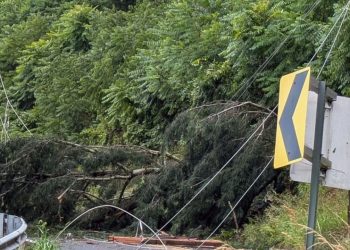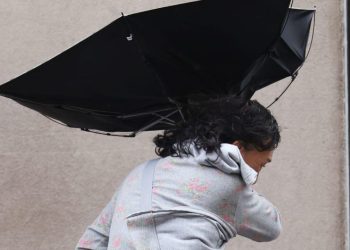
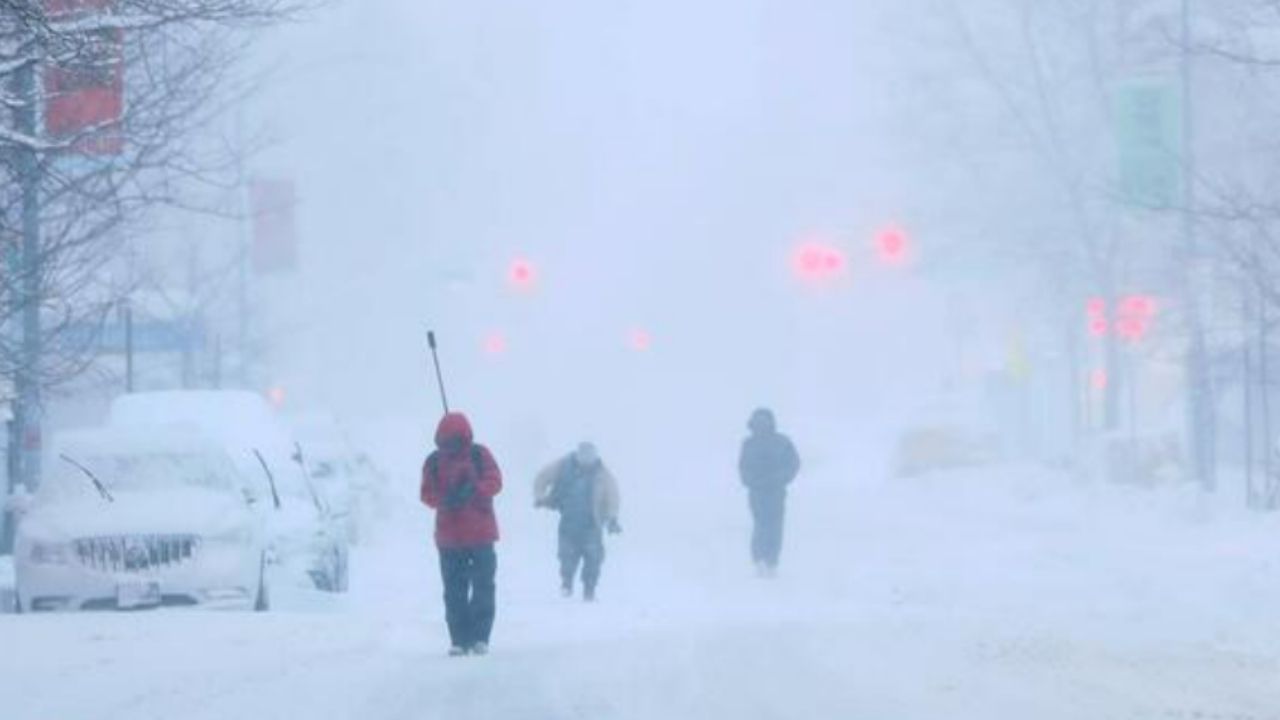
As the middle of April approaches, it should feel pleasant and springlike across America, but some locations are still dealing with unseasonably chilly weather and even heavy snow warnings.
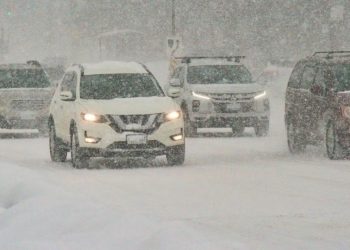
On Sunday, April 12, the National Weather Service issued late winter storm warnings and advisories for heavy snowfall, strong winds, and hazardous travel conditions across much of the United States, including California’s Sierra Nevada, as well as Nevada, Oregon, Alaska, and Hawaii.
Related posts
This Article Includes
- 0.1 Related posts
- 0.2 5 U.S. States Could Might Strike By Tornadoes On Sunday
- 0.3 ‘Severe’ Thunderstorm And Hail Could Strike 6 US States Friday Night
- 1 Expect Heavy Snow, ‘Crest Gusting as High as 80 mph’ From the Weekend Into Monday
- 2 Snow at Higher Elevations Carries Into the Coming Week, Weather Experts Say
Expect Heavy Snow, ‘Crest Gusting as High as 80 mph’ From the Weekend Into Monday
The National Weather Service has issued a winter storm warning for Mono County, California’s Sierra Nevada, which will last until 11 p.m. on Sunday, April 12.
As for what to expect, they predict “heavy snow” as well as “snow accumulations between two to eight inches below 8000 feet, six to 12 inches above 8000 feet, and locally up to 24 inches across higher terrain along the Sierra crest.” Furthermore, “winds peak along the crest, gusting as high as 80 mph and up to 45 to 55 mph along Highway 395.”
The organization cautions that “travel could be very difficult to impossible” as well as that “strong winds could cause damage to trees and power lines. “They warn that if you must travel, keep an extra flashlight, food, and water in your vehicle in case of an emergency.”
Meanwhile, snow is falling on Oregon’s Highway 3 at Scott Mountain Pass, and in Alaska, multiple storm systems are bringing “cloud cover, mixed showers, and snow at higher elevations, with conditions varying dramatically by region,” according to weather experts at Alaska News Source.
Snow at Higher Elevations Carries Into the Coming Week, Weather Experts Say
In Hawaii, the National Weather Service has issued a winter weather advisory for Big Island peaks above 12,500 feet, warning of ice, snow, and wind gusts up to 60 mph.
Snow is expected to fall in higher elevations across the United States this weekend and into next week. Fortunately, the snow will provide needed precipitation. “Rain and mountain snowfall were severely lacking across the west this winter and early spring, but the pattern has shifted to bring much-needed relief,” the Weather Channel writes. Although snowpack is severely low, mountain snowfall measured in feet will assist to make up part of the gap. However, there is still a long way to go, and much more is required.
So, while April is meant to bring spring showers, it is actually delivering spring snowfall. But even that snow will eventually fade away as May and June approach. It seems like the cold weather has lasted forever, but once summer arrives, it will be gone, at least until September. Meanwhile, if you’re dealing with spring snow and ice, remember to travel carefully and with caution. When the roads look dangerous, the best thing to do is stay at home.