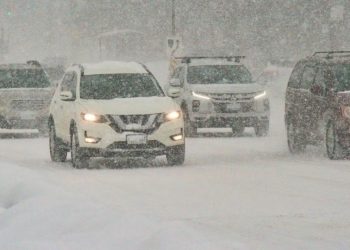

New York and Boston are expected to receive their first snowfall of the season this week, with more winter storms expected to come from Canada, and deliver severe snowfall to the West Coast.
According to AccuWeather, the fast-moving storms will continue to move over the weekend, accompanied by blasts of chilly Arctic air. Forecasters expect that at least one of these storms will bring the New England coast’s first measurable snowfall.
Related posts

Meanwhile, the Midwest is forecast to have another major snowstorm and harsh cold winds. So far this season, New York and Boston have not received a full covering of snow, but this week is likely to change that.
Dan DePodwin, AccuWeather Senior Director of Forecasting Operations, stated, “There is the potential for the first accumulating snow of the season in the Interstate 95 corridor from Philadelphia to New York City and Boston this weekend.”
Winter storm warnings for Massachusetts and New York
The National Weather Service has issued a Winter Storm Warning for Herkimer, Hamilton, and Northern Fulton Counties in New York from late Tuesday through Wednesday night, predicting 7-12″ of snow accumulation or more.
A winter weather advisory has also been issued for the Upper Hudson Valley, western Ulster County, and the southern Green Mountains of Vermont, predicting 2–6″ of snow, with locally higher amounts likely.
The meteorological service predicts substantial snowfall in the region, with some regions along the Adirondacks’ south-facing slopes in Herkimer and Hamilton Counties receiving up to 14 inches.
How much snow will there be in Massachusetts?
From this morning until the early afternoon, snowfall is forecast to vary between 1 and 2 inches per hour. Snow showers are likely to continue into Thursday, with minor accumulations of 1 to 3 inches.
In Massachusetts, Bennington and Western Windham Counties are also predicted to receive substantial snow. This covers the cities of Stratton, Stamford, Pownal, Bennington, Woodford State Park, and Londonderry.
The NWS predicts that snowfall rates in this area will be slightly slower, ranging between 0.5 and 1 inch per hour from Wednesday morning until early afternoon.
The NWS predicts slick and dangerous roads for both automobiles and pedestrians if you’re traveling through these sections of the country. In case of an emergency, the NWS advises keeping an extra flashlight, food, and water in your vehicle.