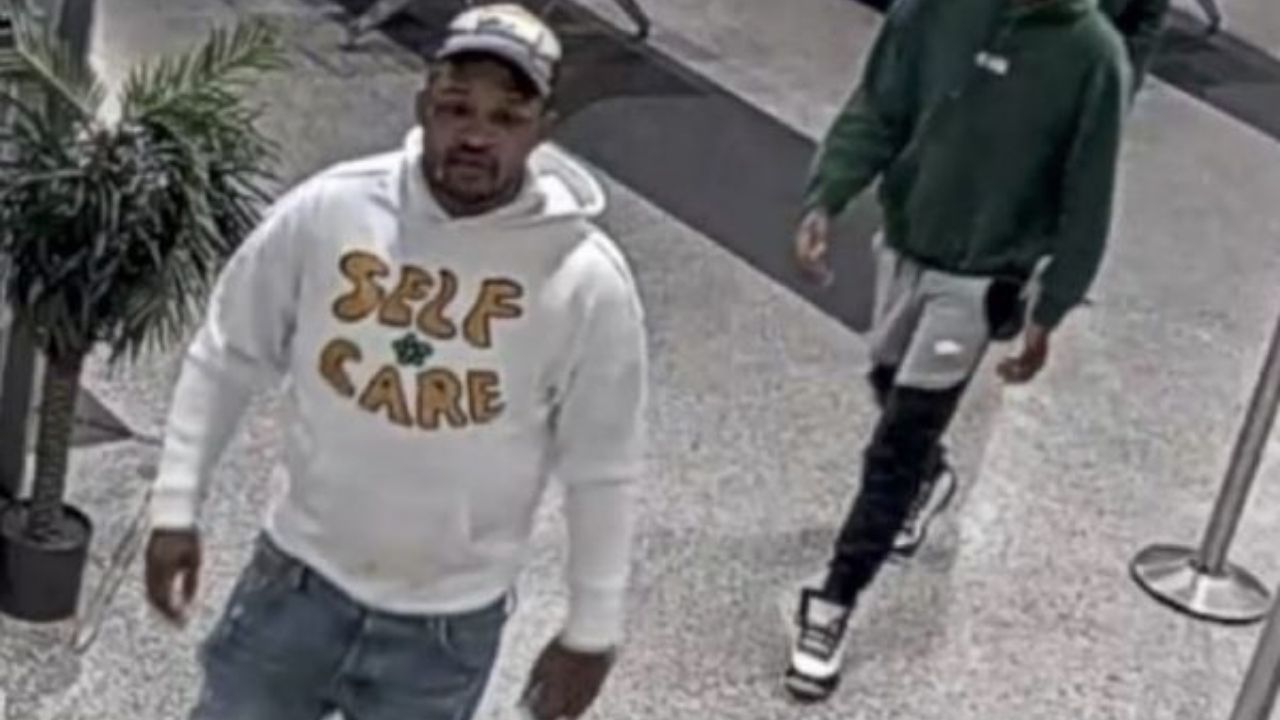
The man identified as the mastermind behind an audacious and widespread yet low-tech bank fraud scheme perpetrated in communities across Southern Illinois and other states has been sentenced to nearly six years in prison.
Prosecutors say that the fraudulent activities occurred from March to May 2023. Traveon Reese, 31, of Atlanta, Georgia, and several co-conspirators stole business checks from the mail, copied account information, and printed fraudulent checks with the forged signatures of local business owners.
Related posts


Reese and others then recruited people, frequently from local homeless shelters or bus stops, to cash the fraudulent checks on their behalf. The fraud scheme targeted more than a dozen locations, including a bank in Collinsville.
Reese attempted to cash 26 fraudulent checks totaling at least $93,413 in Southern Illinois. The banks calculated the actual loss at $46,842.
In April 2024, Reese was indicted in Illinois on 22 felony counts, including bank fraud, conspiracy to commit bank fraud, aggravated identity theft, and aiding and abetting bank fraud, after already being arrested in Iowa on similar criminal accusations.
In August, he pleaded guilty to three of the 22 criminal offenses, including conspiracy to conduct bank fraud, bank fraud, and aggravated identity theft.
All four of Reese’s indicted co-conspirators pleaded guilty and were or will be sentenced. Brandon Cooperwood, 25, of Rex, Georgia, was sentencepay thed to 42 months; DeMarcos Miller, 22, of Atlanta, and T’ziah Thomas, 25, of Villa Rica, Georgia, were each sentenced to 36 months; and Joshua Pruitt, 25, of Rex, pleaded guilty in August to conspiracy to commit bank fraud, bank fraud, and aggravated identity theft and is scheduled to be sentenced on February 26 at the federal courthouse in East St. Louis.
Just a few days have passed since Reese’s sentencing. The defendant requested a 10-month sentence reduction in a handwritten letter to the court, citing his “troubled upbringing…being homeless, (a) continuing drug problem, mental health condition, and extended time spent in federal custody (19 months) in difficult conditions due to lack of dental care.”
Reese reportedly complained of unpleasant prison conditions, including being “housed behind a door.” Further, he added, “A downward departure may be warranted due to the defendant’s youthfulness at the time of the offense.”
Reese, who was 29 years old at the time of the crimes, also requested that his sentence run concurrently with his state sentence. However, one of the crimes to which he pleaded guilty is aggravated identity theft, which, according to the agreement, “must run consecutive to any sentence imposed on any other count and any undisclosed sentences,” which the judge imposed at sentencing.
Reese was also ordered to pay restitution of $39,521.59.
Reese has a lengthy criminal record, stretching back at least 12 years. In 2014, he received a one-year suspended sentence for narcotics convictions in Arkansas. In 2016, he was sentenced to five years in Georgia for an undisclosed crime; in 2018, he was sentenced to several years in New York for forgery; and in May 2024, he received a 20-year sentence for “theft, forgery, identity theft, solicitation to commit a felony, and conspiracy” for a criminal scheme in New York that is identical to his crimes in Illinois.
When Reese was caught in Dubuque in 2023, he had $11,383.88 with him. Police say he and a co-conspirator promised a 19-year-old woman $500 to cash a $3,200 check, which she accepted. However, the following effort to cash a forged check was denied by bank employees, and police tracked down Reese’s automobile and arrested him and two others.
When Iowa police investigated Reese’s hotel room, they reportedly discovered a printer, laptop, “multiple checks believed to be stolen, multiple fraudulently created checks, and blank check paper used to print the fraudulent checks,” according to media accounts at the time.
“This conspiracy victimized numerous hardworking people across central and Southern Illinois by trying to cash bogus checks belonging to legitimate businesses at local financial institutions, leaving the banks on the hook and causing them financial harm when successful,” according to U.S. Attorney Steven Weinhoeft.
As is customary in such extensive fraud instances, Weinhoeft observed that the investigation necessitated the participation of multiple local police agencies, as well as the Illinois State Police and the FBI. Illinois State Police authorities headed the investigation, with assistance from the FBI’s Springfield Field Office.
ISP Director Brendan F. Kelly promised to continue working with local and federal law enforcement partners “to fully investigate these cases,” noting that “identity theft and bank fraud can financially decimate a business owner’s life.”